EPIPHONE FT-50 Acoustic Gibson Rarer Texans International Buyers Welcome Alumpster
( Brand: Epiphone ), ( Model: FT-50 ), ( Part Type: Acoustic ), ( Body Type: Lg Or 00 ), ( Series: Ft ), ( Dexterity: Right-handed ), ( String Configuration: 6 String ), ( Country/region Of Manufacture: United States ), ( Model Year: 1942 ), ( Body Material: Mahogany )
Review EPIPHONE Very Rare Acoustic Pre gibson Gd Cond Rarer Than Texans International Buyers Are Welcome At Alumpster
Epiphone FT-50 Acoustic Guitar (1942 Reissue) - A Rare and Authentic Pre-Gibson Vintage Find
The Epiphone FT-50 acoustic guitar is a highly coveted and rare find for collectors and musicians. This instrument is a unique reissue of a classic Epiphone model, originally produced before Gibson's acquisition of the Epiphone brand in 1957. This pre-Gibson Epiphone piece, specifically a 1942 GD (Grand Dreadnought) model, is an international delight for both vintage enthusiasts and discerning players seeking an authentic acoustic sound.
Firstly, the Epiphone FT-50 (1942 Reissue) features a beautiful solid Sitka spruce top, which provides a rich, resonant tone and excellent clarity. Brace for an invigorating playing experience as this classic acoustic boasts a Grand Dreadnought body shape, renowned for delivering powerful, full-bodied sound. The back and sides are adorned with mahogany wood, adding to the instrument's impressive tonal quality.
The Epiphone FT-50 (1942 Reissue) comes dressed in a pristine sunburst finish, which not only adds to its visually appealing charm but also creates a protective layer against the rigors of daily use. The guitar's neck is fashioned from mahogany, ensuring a comfortable playing experience, and its 14-inch radius gives just the right amount of curve for optimal hand positioning.
Outfitted with a traditional bone nut and saddle, the FT-50 (1942 Reissue) offers a premium playing experience and vintages-esque, warm tone. The rosewood fingerboard hosts subtle pearl dot inlays, which add to the guitars exclusivity while providing excellent grip in various playing conditions. The instrument is adorned with open-gear, classic-style Epiphone tuners, ensuring precise and stable tuning.
Expertly crafted in Epiphone's skilled workshops, this pre-Gibson vintage model captures the essence of iconic acoustic guitars from a bygone era. With each strum, you will be transported to a time when music was raw, authentic, and full of character. For international buyers, this rare and exquisite Epiphone FT-50 (1942 Reissue) is the perfect addition to any collection or a must-have piece for serious players looking for a step into the rich history of acoustic guitar craftsmanship.
Pros and Cons of Buying an FT-50 1942 Epiphone Acoustic Guitar: A Pre-Gibson GD Rarer Texan Model
The Epiphone FT-50 1942 is a pre-Gibson, rarer Texan model acoustic guitar. While this guitar holds historical significance and offers unique features, the decision to buy one depends on various factors. This analysis provides a list of pros and cons to help potential buyers make an informed decision.
Pros:1. Historical Significance: This guitar is a pre-Gibson Epiphone, meaning it was produced before Epiphone was acquired by Gibson in 1957. The Texan model was Gibson's premium offering during the 1930s and 1940s, so owning the Epiphone FT-50 1942 allows players to connect with a rich musical history.
2. Authentic Tone: Vintage instruments often have a unique sound due to the aged tonewoods and design features. The FT-50 1942's solid spruce top and mahogany body deliver warm and well-rounded sound perfect for various playing styles.
3. Rare and Collectible: Being a rarer Texan model, this guitar can be considered a collector's item. Its aged look, unique features, and intricate details make it a desirable addition to any collection.
4. Playability: The FT-50 1942 boasts a comfortable neck profile and adequate fretwork. Its playability comes close to that of modern instruments, making it an excellent choice for both amateur and professional players.
5. Affordability: Compared to contemporary vintage guitars, the FT-50 1942 offers fair value for its historical significance and rarity.
Cons:1. Aging Process: Like all vintage instruments, the FT-50 1942 may have various signs of aging, such as cracks, finish wear, or structural damage. Evaluating the condition and integrity of the guitar prior to purchase is essential to ensure its viability for regular play or as a collectible.
2. Repair and Maintenance: The age of the guitar increases the likelihood of requiring various repairs or maintenance work, which can add to the overall cost. Regular upkeep may be necessary to maintain the instrument's condition.
3. Lack of Modern Amenities: The FT-50 1942 does not come with modern amenities, such as cutaway body designs or pickups, which may be desirable for some players.
4. String Action and Intonation: Older instruments may have uneven string height or intonation issues. This might require some setup modifications to ensure optimal playability.
Conclusion:The Epiphone FT-50 1942 pre-Gibson, rarer Texan model, acoustic guitar delivers a rich musical history, authentic tone, and unique aesthetic. It is an excellent investment for collectors, amateur and professional players, and those with an appreciation for fine vintage instruments. However, prospective owners should be prepared for potential age-related issues and the need for regular maintenance.
Recommendation:Before making a decision to buy the FT-50 1942, consider the potential implications of owning a vintage guitar, including budget and desired usage. If the guitar is intended for regular play, it's essential to have it inspected and evaluated by a professional luthier before purchasing. For those who prefer modern amenities, alternative options available in the market offering similar sound and aesthetics may be worth exploring. Ultimately, a well-informed decision can lead to a rewarding and enjoyable ownership experience.
Details:
Body width , mfg. There have naturally been some repairs over this guitars 75 years of making music. The war production boards limitation order limited by percentage of weight how much metal a stringed instrument could have and discouraged gibson, martin, epi, others from installing truss rods.
The pick guard and binding are a beautiful translucent vintage celluloid in excellent condition. And it does let the sound out, as loudly with much resonance any lg-2 or lg-3 I have ever played. Cosmetically, it is as pictured: massive crazing, cracking, and chipping of the finish to let sound out, my Luther says, but all Moho authenticity one could ever hope for. Gibson used a maple v reinforcement in necks while martin an ebony rod.
I see cracks in the top below bridge, at of pick guard, and sound hole, both back seams have opened slightly all been humidified, glued, cleared where necessary to prepare them for another 75 years. Soon after that, the FT-50 was cut for good.
The tuners are somewhat rusted but work well, period-correct, and show no sign of change. It is an x-braced musical marvel which in very good 75-year-old condition. However, this was exacerbated by the times and their clientele: first depression hit buyers, then WWII further complicated construction innovation.
The latches and hinges all work, handle is solid, interior exterior are intact. It offers credible, light-weight protection, but frankly I would probably find an appropriate hard shell case for this valuable guitar.
As far a non-expert like myself can tell, virtually all of these specifications are exhibited in this guitar. The blue book of vintage guitars says that FT-50 is a style, spruce top, round sound hole, mahogany back sides, tortoiseshell body binding, cherry neck, tortoise pick guard, 14 20-fret bound rosewood fingerboard with inlay, bridge, three-per-side tuners plastic buttons, available in natural finish.
The case included is a vintage but clearly not original chip board in good condition. The model line was also reduced during war, and FT-50 apparently one that cut, although they start reappearing later with serial numbers indicating exceptions are bridge, saddle, bridge pins, which obvious replacements. Quite a remarkable instrument. Available: 1941-late 40s.
Pre-war and war-time Gibson's martins are readily available for exorbitant prices 1950s even 1960s gibson Epiphone ft texans routinely sell to I have made every effort describe illustrate this guitar case with scrupulous accuracy, but be advised that is a very unusual 75-year-old guitar, am not Luther, much less an expert on vintage Epiphone. Epiphone started using what they called the adjustable thrust rod in 1939, usually with a metal nut cover.
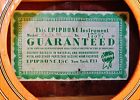
Grins guide to vintage guitars indicates with great confidence that the serial number clearly visible on label it was made in 1942, and goes describe as a flat-top, wide, mahogany back sides, tortoiseshell celluloid binding top back, cherry neck, unbound rosewood fingerboard, inlay, center-dip pegged, pearl script logo, natural finish, brown finish sides. It has a very nice pearl inlaid script logo on the head stock, and neck is solid set at proper angle: action comfortable hair over 12th fret low e.
The scarcity of Epiphone flat-tops during 1930s to 1950s was no doubt partly due their battle with better-financed gibson and martin for a share steel-string market. This specific guitar is the only vintage FT-50 I have ever seen for sale anywhere, on-line or otherwise. They Ian gonna make any more of em, and you'll probably never see another one. There is surprisingly little fret wear, but some visible wear in first position on the fret board.
part #: ft50 prices
- $200.00-$699.00
specifications acoustguitmusi:
- brand: Epiphone
- model: Ft-50
- part type: Acoustic
- body type: Lg Or 00
- series: Ft
- dexterity: Right-handed
- string configuration: 6 String
- country/region of manufacture: United States
- model year: 1942
- body material: Mahogany
Shipping acoustguitmusi:
- type: Flat
- handling: 1 days
- cost: $55.0
Payments acoustguitmusi:
- PayPal
Ratings:
- Great buyer and quick payment! Thanks for shopping with us! 06-16-17
- Quick payment, very professional. 06-08-17
- What an absolutely fantastic old Martin guitar. Thank you! 06-06-17
- Quick response and fast payment. Easy and pleasant transaction! 06-07-17
- All good! 06-19-17
Offer acoustguitmusi:
- best offer: true
- Sold: 0
- Started: July 1, 2017, 6:00 pm
- quantity: 1
- bids: 0
General acoustguitmusi:
- musical instrumentsgear > guitar musical instruments gear > acoustic guitar
- in stock: Yes
- condition: Used
Returns acoustguitmusi:
- policy: no returns
Seller acoustguitmusi:
- city: Columbia, South Carolina
- zipcode: 29210
Epiphone FT-50 Is Similar To:
- 28674 Usa Acoustic Natural Guitar Ft-27 1939 Vintage Epiphone Stripped (30.3% similar) This one won't last long make it yours today. Necktie one piece mahogany neck shows a very slight amount of bow, yet is very comfortable to play. It features a spruce top, mahogany back sides. The heel cap is missing, as is most of the binding that originally surrounded the inside of the sound hole...(July 20th, 2015)
- 6732 Epiphone Gibson Made 1962 (57.6% similar) Brand new elixir nano-web strings light medium gauge. No made in USA stamp on back. 056 this is what I could find for the age on it serial, 5TH row of numbers down: gibson-made number, 1961 to 1969 , all instruments non a series number range year few from 6 digit starting with are or 1967 ...(July 3rd, 2017)
- 6830 Epiphone Model Acoustic Guitar (46.9% similar) For a nearly 50 year old guitar there are few signs of age other than minor scuffs and handling marks. It features a bolt on neck, zero fret, adjustable bridge, spruce top with rosewood sides back and fret board.: Epiphone model 6830 acoustic guitar made in japan the early 1970 S and good overall ...(September 17th, 2018)
- 6830e Epiphone Vintage Acoustic Made In Hsc (41.7% similar) In very nice condition considering its age. For sale: one used vintage Epiphone 6830E acoustic guitar. Comes in a HSBC. From the 1970 S and Japanese built. Has normal bumps and dunks...(August 19th, 2018)
- 940edread Epiphone Acoustic Classical Guitar Bags Cases Dreadnought 139022446104 (34.9% similar) We reply every message within 48 hours. Let us create a positive community together. If you did not receive our reply. Running business is not easy inch's...(June 25th, 2018)
- Aj-10 Wr Epiphone Acoustic Guitar (46.9% similar) All else is really great. Come with case as shown. Guitar is in overall really great condition. One string needs to be replaced very minor cheap fix. Up for offer is the Epiphone AJ-10 wry marked at top gibson acoustic guitar - rare wine red with case. No breaks, chips really nice as you can see ...(September 10th, 2017)
- Aj-100 Epiphone Aj 100 Acoustic 0711106263380 (40.5% similar) The new AJ-100 advanced jumbo or sloped shoulder acoustic guitar is just as famous for having a slightly sweeter tone that's perfect both leading band and solo singers. Case sold separately. Tuning the ltd. The neck is glued to body and hand-set so entire guitar resonates as if it were a single ...(January 28th, 2018)
- Aj-100bk Epiphone Acoustic Guitar (48.4% similar) Feel free to ask any questions. I know very little about guitars that is the reason our of usually short...(February 2nd, 2018)
- Aj-100vs Epiphone Rh Dreadnought Acoustic Guitar Yellow (38.1% similar) Here find out why stated bravo has best solved brick mortars can sell on...(December 21st, 2018)
- Aj-1na Epiphone Na Acoustic Guitar Hard Cases (40.5% similar) I will answer what can. 2 Epiphone AJ-1 na acoustic guitar w hard cases jumbo guitars sold as lot is. Contact me with questions. Pic guard peeled up on one, see pics...(February 24th, 2019)
- Aj-220s-vs Epiphone Acoustic Guitar Aj-220s (47.2% similar) No case included. Please, check our pictures for more details. Guitar has several scratches and dents on its body, but no serious issues or something to worry about. Have a question. Return shipping is free, for details. All pictures showed the item in its actual condition. Overall the guitar still ...(December 19th, 2017)